
Camp Tel Yehudah
Overview
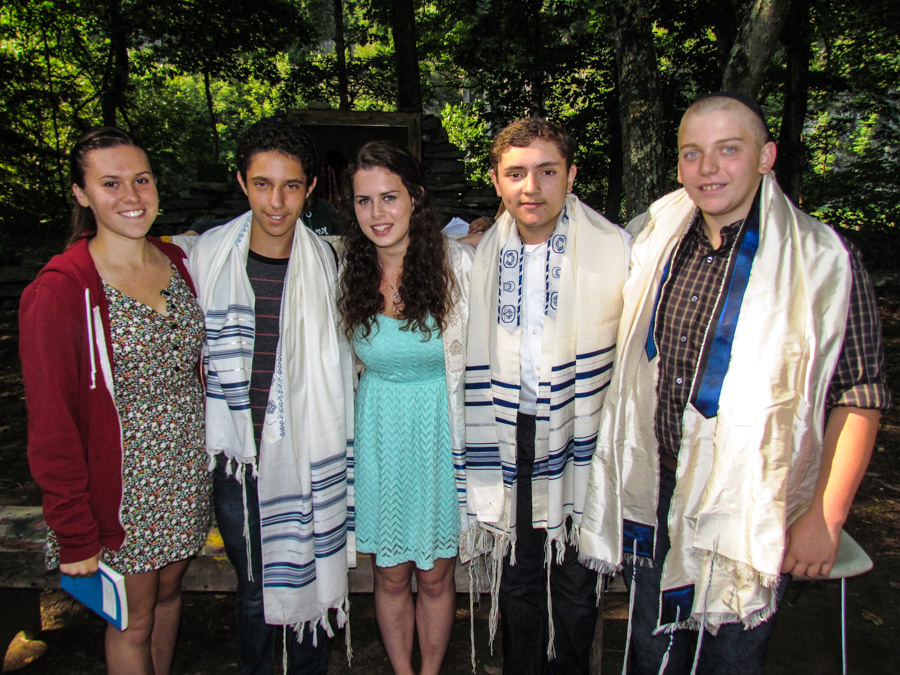
Connected Wisdom reached Camp Tel Yehudah through a third-party introduction. The camp liked the concept and was interested in an approach using the principles of our method of connection. In August 2015, a team of thirteen trainers from Brooklyn ran two outdoor sessions with about 100 teenage campers — teens from across North America, as well as Israel, Europe, and Latin America.
They sat on chairs in circles outdoors. We started with connection games to warm things up. Once the atmosphere opened, we moved into questions and discussion.

Challenge
They were uncertain at the start. When we asked what it means to be Jewish, some of them rolled their eyes. They told us straight up: that is the question they get asked all the time during activities. We had to change course quickly.
Approach
We asked a few volunteers to share the answers they normally give. Then a short 1–2–3 from our sources: we are a people united by an ideology, not only by shared history — mutual guarantee, united under the single source of nature. When we learn to tap into that through the connection between us, forces open unlike anything most people have experienced.
We started with the entanglement game. The teens held hands left-to-left and right-to-right with their backs to the circle — tangled, facing outward. They had to finish standing correctly in a circle, facing each other, still holding hands: start outward and tangled, end facing one another and untangled.
That game brought engagement. Next was a compliment circle. At the end, each person shared what stood out most to them — a glimpse of connection, a very good state.
What changed
There were many different reactions. The game drew them in. The compliment circle brought awe at the feeling of connection moving through the group. Naming what stood out at the end let them feel that glimpse again.
Afterward, the tone was generally positive. Teens and younger people do not usually go very deep in words yet — and that is normal.
Takeaways
Looking back, the physical activities made the discussion possible. Games that ask a group to solve a problem together warm the room in a way discussion alone does not. If a question falls flat because campers already hear it all summer, the right response is to listen and adjust, not to push through. Teens rarely need to analyze the experience out loud — it is enough to let the activity create the feeling of connection, then give each person a chance to name one moment that stood out.
References
- Camp Tel Yehudah — telyehudah.org
- Photos courtesy of Camp Tel Yehudah (telyehudah.org). All rights remain with the camp.